News
ASAM Releases New Guide to Strengthen Substance Use Disorder Care in Hospitals and Emergency Departments
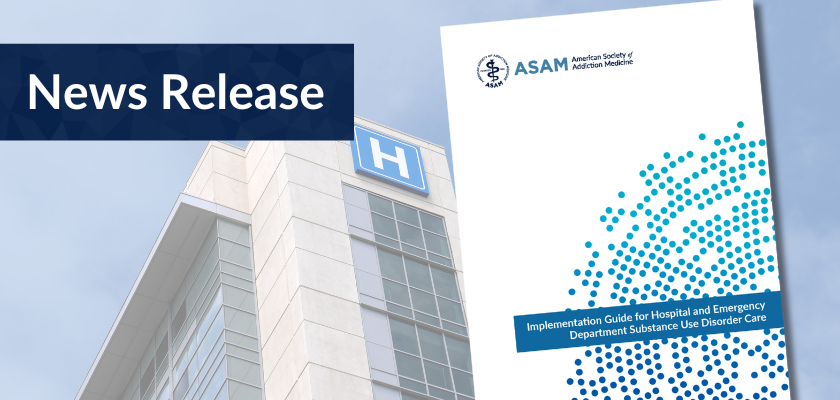
Rockville, MD (March 30, 2026) - The American Society of Addiction Medicine (ASAM), a leading medical society dedicated to improving addiction care, today released its Implementation Guide for Hospital and Emergency Department Substance Use Disorder Care, a new guide to help hospitals and emergency departments (EDs) meet nationally recognized standards of care for patients with substance use disorders (SUD). The guidance comes as drug overdose remains the leading cause of death for Americans under age 50 and national policymakers aim to dismantle care silos.
SUD is common among patients in hospitals and EDs but often goes unaddressed despite the availability of effective treatments. Untreated SUD is associated with high costs and increased rates of premature hospital discharge and mortality. ASAM’s new guide provides hospital and ED leadership with an overview of SUD care standards, along with care delivery models and actionable strategies to effectively meet those standards and improve patient outcomes.
"For patients with severe addiction, EDs are sometimes the only point of contact with the health care system. This positions EDs and hospitals as vital gateways to life-saving treatment and recovery,” said Itai Danovitch, MD, DFASAM, co-author of the guide and chair of ASAM’s Quality Improvement Council. “Research shows that when services are offered, including medication and psychosocial interventions, patients are more likely to initiate effective treatment and connect with aftercare services. Integrating SUD care can also reduce stigma among clinicians, increasing comfort and willingness to provide SUD treatment.”
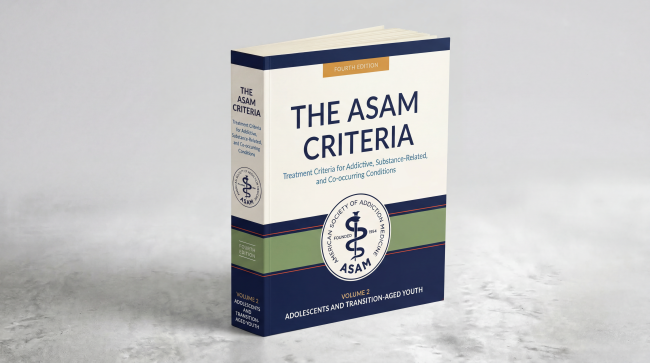
Healthcare in the United States faces increasing pressure to reduce care fragmentation and deliver evidence-based addiction treatment services. The new guide describes seven core capabilities that all hospitals can meet to effectively care for patients with SUD. This includes identification and engagement of patients with SUD; intoxication and withdrawal management; overdose and post-overdose care; initiation and continuation of addiction medications; assessment and management of common co-occurring conditions; linkage to ongoing SUD care; and risk reduction. These hospital standards are aligned with the Fourth Edition of The ASAM Criteria, the most widely used and comprehensive set of standards for matching patients with addiction to an appropriate level of care.
The guide also describes how hospitals can deploy one or more different care models to fit their unique needs and ensure they meet the core standards for SUD care. These models include addiction consult services (ACS) models, practice-based models, in-reach models, and linkage to care models, such as bridge clinics.
“While all EDs and hospitals should meet basic standards, centers that manage a high volume of patients with complex conditions that frequently co-occur with SUD, such as trauma centers, transplant centers, or cardiac surgery centers, should ideally have interdisciplinary, interprofessional addiction consult services staffed by addiction specialists,” said Sarah Wakeman, MD, FASAM, chair of the ASAM presidential task force that oversaw the creation of the guide. “This is how hospitals approach other common conditions and patient needs."
Hospital administrators and clinical leaders can also find a step-by-step implementation guide to receive organizational buy-in, identify champions who can drive implementation processes forward, and make the business case for expanding SUD services.
“The evidence is clear that treating SUD in hospital and ED settings is feasible, rewarding, and improves outcomes,” Dr. Wakeman added. “Now is the time to implement what we know works and for SUD care to become a routine element of medical care for all hospitals and EDs.”
# # #
About the American Society of Addiction Medicine
The American Society of Addiction Medicine (ASAM), founded in 1954, is a professional medical society representing over 8,000 physicians, clinicians, and associated professionals in the field of addiction medicine. ASAM is dedicated to increasing access and improving the quality of addiction treatment, educating physicians and the public, supporting research and prevention, and promoting the appropriate role of physicians in the care of patients with addiction. For more information, visit www.ASAM.org.
Media Contact
Sarah Shelson
301-547-4110
sshelson@ASAM.org